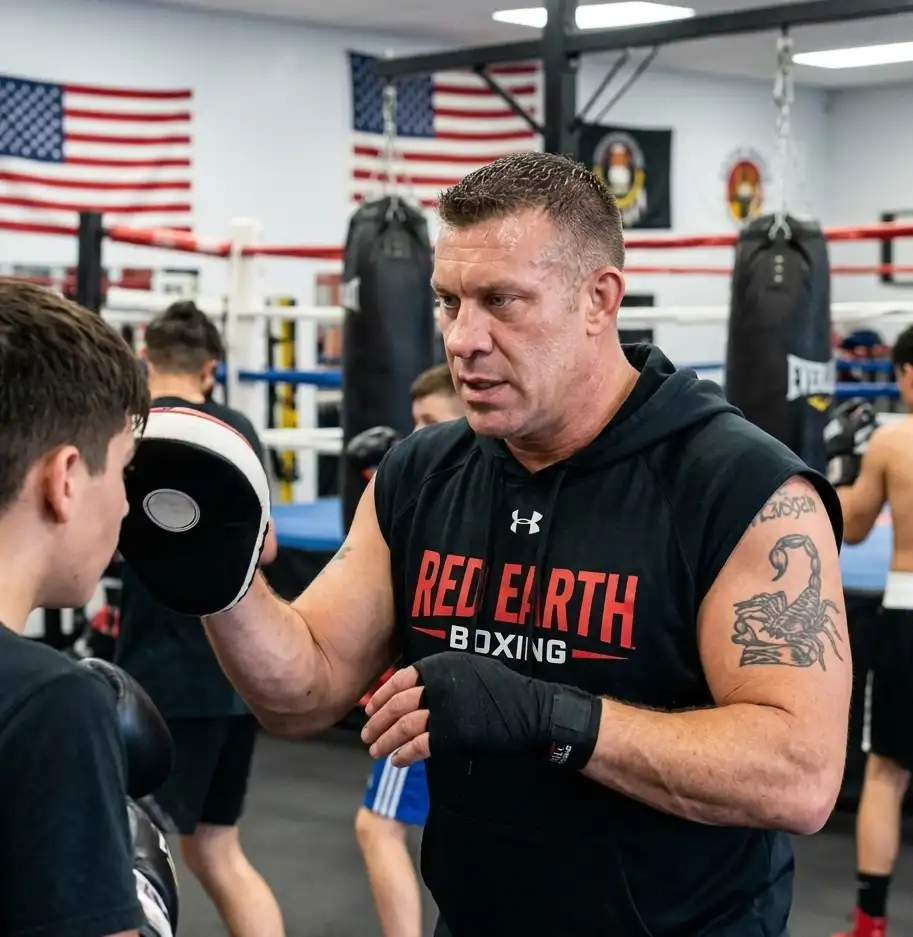
11 Beginner Boxing Mistakes That Slow Progress Fast (Fix Them Now!)
I’ve seen it a hundred times. Someone walks into the gym, all fired up, throwing bombs at the heavy bag like they’re trying to knock it through the wall. Two weeks later, they’re nursing a wrist injury, their shoulders are wrecked, and they’re wondering why they’re not getting better.
Here’s the thing nobody tells you when you start: boxing looks simple until you’re actually doing it. Then everything falls apart. Your feet don’t move right, your hands drop, you gas out in thirty seconds, and that guy who’s been training for six months makes you look like you’ve never thrown a punch in your life.
It’s humbling. But it doesn’t have to be this hard.
Quick Answer
What are beginner boxing mistakes? Common errors include poor stance, holding your breath while punching, dropping your hands, prioritizing power over technique, skipping defense, improper hand wrapping, overtraining, neglecting cardio, bad sparring habits, ignoring footwork, and avoiding shadowboxing.
Biggest mistake: Trying to hit hard before learning to hit right. Power without technique just gets you injured.
Difficulty level: Moderate to fix, but requires humility and repetition.
Learning curve: 3-6 months to develop solid fundamentals if you train consistently 3x per week.
Safety concern: Poor hand wrapping and reckless sparring cause most beginner injuries.
1. Ignoring Stance and Footwork Fundamentals
You want to throw punches. I get it. That’s the fun part. But if your feet are wrong, nothing else works.
I see beginners all the time standing with their feet too close together, or flat-footed, or with their weight all on their back foot, like they’re ready to run. Then they wonder why they can’t move, why they’re off-balance, why every punch feels weak.
Your orthodox stance (left foot forward if you’re right-handed) or southpaw stance (right foot forward if you’re left-handed) is your foundation. Feet should be shoulder-width apart, knees slightly bent, weight balanced so you can move in any direction without telegraphing it.
Here’s what happens when you skip this: you try to pivot, and your feet cross. You try to advance, and you’re flat-footed. You try to counter, and you’re already off-balance before the punch leaves your hand.
Good pivot footwork lets you create angles. Proper distance control keeps you safe. Neither happens if your stance is garbage.
Watch any amateur sparring session at a USA Boxing event. The fighters with solid footwork control the ring. The ones who stand flat get picked apart.
2. Holding Your Breath When You Punch
This one’s so common it’s almost universal among beginners. You throw a combination, and by the third punch, you’re holding your breath, your face is turning red, and you feel like you’re drowning.
Boxing is about rhythm and breathing. Every punch should have a sharp exhale. Not a grunt, not a scream, just a controlled “shh” or “tss” sound as you extend.
When you hold your breath, three things happen:
- You tense up your whole body, slowing your punches
- You gasp for breath faster because you’re not oxygenating
- You lose snap on your shots because tension kills speed
I make new fighters count out loud when they hit the bag. “One-two-three-four” with each punch. Sounds ridiculous, but it forces them to breathe. Within a week, they’re throwing faster combinations without dying.
Your jab timing suffers when you’re not breathing right. Your defensive reactions slow down. Everything gets harder.
3. Dropping Your Hands After Combinations
You throw a nice one-two to the bag. Feels good. So you drop your hands to your sides, shake them out, maybe adjust your gloves. Then your coach yells “hands up!” for the fiftieth time that session.
Here’s why this matters: in a real exchange, that split second when your hands drop is when you get caught. I’ve seen it in amateur sparring a thousand times. Someone lands a clean combination, drops their guard to reset, and eats a counter hook right over the top.
Your defensive shell should be your default position. Hands at cheek level, elbows tucked, chin down. Always. Even when you’re tired. Especially when you’re tired.
Beginners think defense is something you do separately from offense. It’s not. Defense is part of every punch you throw. You extend, you retract back to guard. That’s it. No fancy reset, no dropping your hands.
4. Chasing Power Over Technique
Every beginner wants to hit hard. I understand. There’s something satisfying about smashing the heavy bag and hearing that loud thwack echo through the gym.
But here’s what actually happens: you’re muscling everything, your technique is terrible, your wrists hurt, and you’re not actually generating real power. You’re just swinging hard.
Real punching power comes from:
- Proper weight transfer from your back foot
- Hip rotation
- Shoulder extension
- Relaxed arms until impact
- Good technique, period
When you try to muscle punch, you tense up. Tension kills speed. Speed is power. So by trying to hit harder, you’re actually hitting weaker.
I see this constantly on the heavy bag. Beginners wind up like they’re throwing a baseball, telegraphing every shot. Meanwhile, the experienced fighter next to them is throwing counter hooks that sound like gunshots, barely moving their feet, looking relaxed.
That’s the goal. Relaxation, not tension. Technique, not brute force.
According to boxing coaching standards taught through organizations like USA Boxing, power development comes after technical proficiency, not before. Learn to punch correctly first. The power comes naturally.
5. Neglecting Defense Until It’s Too Late
Beginners love offense. Throwing punches feels active, aggressive, and productive. Defense feels passive. You’re just… not getting hit? Boring.
Then they get in their first sparring session and eat punches for three minutes straight, wondering why nobody taught them how to slip or parry.
Defense isn’t secondary. It’s half the sport. Maybe more.
Basic defensive skills you need:
- Slip rope drill practice for head movement
- Parrying jabs and crosses
- Blocking hooks with your guard
- Rolling under punches
- Footwork to create distance
Most beginners have zero defensive instincts. They just stand there and take shots, or they panic and turn away. Neither works.
Defense takes longer to develop than offense. Your reflexes need time to adapt. That’s why you should start drilling defensive movements from day one, not after you’ve learned ten different combinations.
6. Sloppy Hand Wrapping and Poor Glove Fit
Your hands are made of small, fragile bones. You’re about to punch hard objects repeatedly. This is not a good combination unless you protect yourself.
I’ve seen beginners wrap their hands in thirty seconds, leaving their knuckles exposed and their wrists unsupported. Then they wonder why their hands hurt after hitting the bag for five minutes.
Proper boxing wraps should:
- Support your wrist completely
- Cover your knuckles with enough padding
- Secure your thumb
- Feel snug but not cut off circulation
It takes practice to wrap your hands correctly. Watch tutorials. Ask your coach to show you. Take your time with it. Your hands will thank you later.
Glove fit matters too. Gloves that are too big slide around. Gloves that are too small crush your hands. For training, most beginners should use 14oz or 16oz gloves, depending on their size. Check our beginner glove guide for specific recommendations.
Hand injuries are the most common boxing injury for beginners. Most are preventable with proper wrapping and glove selection.
7. Training Too Hard, Too Soon
You’re motivated. You sign up for boxing classes five days a week. You hit the heavy bag until your shoulders burn. You do extra rounds of sparring because you want to improve fast.
Two weeks later, you’re injured, burned out, or both.
Boxing is brutal on your body, especially when you’re new. Your muscles aren’t conditioned for the specific demands. Your joints aren’t used to the impact. Your nervous system isn’t adapted to the intensity.
Most beginners should start with 2-3 sessions per week, max. Let your body adapt. Build up gradually.
The National Academy of Sports Medicine recommends progressive overload for combat sports conditioning. That means gradually increasing intensity, not jumping in at 100% from day one.
I’ve seen too many talented beginners quit because they trained so hard their first month that they got injured or completely exhausted. Boxing is a marathon, not a sprint. Pace yourself.
8. Underestimating Conditioning Needs
You’re in decent shape. You run sometimes. You hit the gym. You think you’re ready for boxing conditioning.
Then you do three minutes on the heavy bag, and you’re gasping for air, your arms feel like lead, and you can’t lift your hands to guard.
Boxing conditioning is specific. It’s not the same as running or general gym work. You need:
- Anaerobic endurance for high-intensity bursts
- Shoulder endurance to keep your hands up
- Core stability for rotational power
- Leg endurance for constant movement
Jump rope drills aren’t just tradition. They build the specific endurance you need for boxing. Interval training mimics the stop-start nature of rounds. Roadwork builds your aerobic base.
Most beginners underestimate how demanding boxing is cardiovascularly. You’re not just throwing punches. You’re moving constantly, defending, thinking, reacting. It’s exhausting.
Don’t skip the conditioning work because you want to spend all your time on technique. You need both. If you’re too gassed to throw punches in round three, your technique doesn’t matter.
9. Developing Bad Sparring Habits Early
Sparring is where everything falls apart. You’ve been drilling combinations for weeks, hitting the bag clean, feeling good. Then you get in the ring with another person trying to hit you back, and suddenly you can’t remember which end is up.
This is normal. Sparring anxiety is real. Your heart rate spikes. Your breathing gets shallow. You forget everything you’ve learned.
The mistake beginners make is either:
- Sparring too hard, too soon, and developing defensive problems
- Avoiding sparring entirely and never learning to apply skills
You need amateur sparring experience to improve, but it should be controlled. Light technical sparring where you focus on specific skills, not trying to knock each other out.
Bad sparring habits I see constantly:
- Closing your eyes when punches come at you
- Turning your back instead of moving laterally
- Swinging wildly instead of throwing measured shots
- Freezing up and just covering up
- Trying to trade punches instead of using defense
These habits become ingrained if you spar too hard before you’re ready. Start light. Focus on one skill per session. Build up gradually.
10. Only Training in Your Comfort Stance
You’re orthodox. You only train orthodox. You never think about what happens if you get pushed into a corner, or if your opponent switches stance, or if you need to pivot to your blind side.
Boxing isn’t static. You’ll be forced out of your comfort zone constantly. If you’ve only ever trained from your perfect stance with perfect distance, you’re not ready.
You should understand both orthodox and southpaw positioning, even if you only fight from one. You need to know:
- How to fight someone who switches stances
- How to adjust your feints and angles against different stances
- How to move when you’re not in your preferred position
This doesn’t mean you need to become ambidextrous overnight. But you should drill situations where you’re uncomfortable. It happens in sparring. It happens in fights. Be ready.
11. Skipping Shadowboxing and Mental Reps
Shadowboxing feels silly. You’re punching air. There’s no resistance, no feedback, no bag to smash. It’s boring compared to hitting pads or the heavy bag.
It’s also one of the most important tools you have.
Shadowboxing is where you:
- Work on technique without fatigue
- Visualize an opponent and practice ring IQ
- Drill combinations at full speed
- Practice footwork and angles
- Build muscle memory
Most beginners skip it or phone it in. They do thirty seconds of lazy shadowboxing before getting to the “real work” on the bags.
Mental reps matter too. Visualizing combinations, defensive movements, and ring scenarios actually improves performance. Combat sports research shows that mental rehearsal activates similar neural pathways as physical practice.
Spend at least 10-15 minutes per session on quality shadowboxing. Move around. Visualize an opponent. Work on specific skills. It’s not wasted time. It’s foundational.
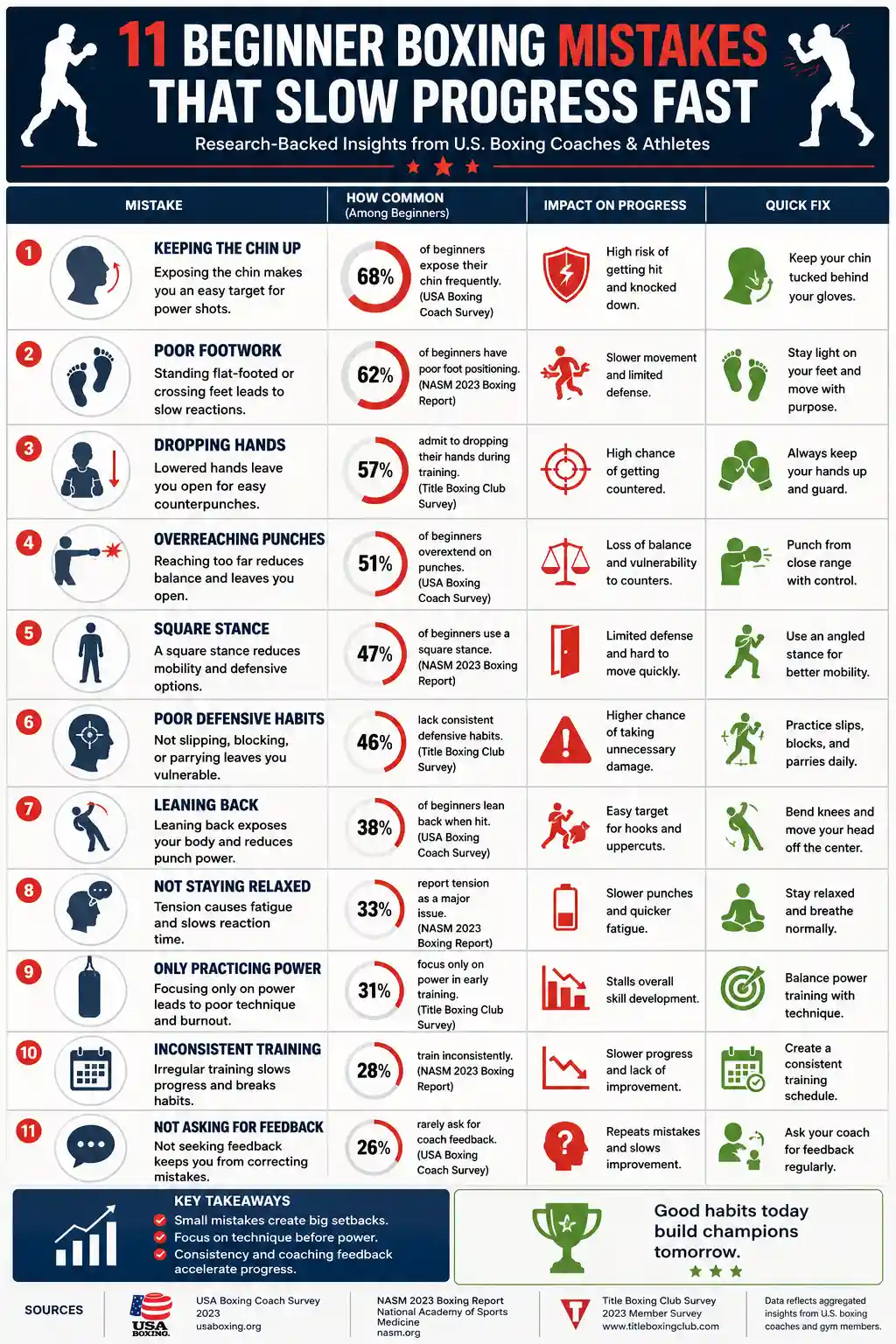
Beginner Boxing Checklist
Before Your First Month:
- Learn proper hand wrapping technique
- Get fitted for appropriate gloves (14-16oz for training)
- Master basic stance in both orthodox and southpaw
- Practice basic footwork daily
- Learn to breathe properly when punching
- Understand basic defensive positions
- Start with 2-3 training sessions per week
- Find a qualified coach or gym (check USA Boxing affiliation)
First 3 Months Goals:
- Keep your hands up consistently during combinations
- Throw clean jab-cross combinations
- Basic slip and parry defense
- 3-minute rounds without complete exhaustion
- Controlled light sparring experience
- Proper warm-up and cool-down routine
Equipment You Actually Need
You don’t need to spend a fortune to start boxing, but you do need some basics:
| Equipment | Priority | Why It Matters |
|---|---|---|
| Hand wraps | Essential | Protects wrists and knuckles from injury |
| Boxing gloves (14-16oz) | Essential | Hand protection and bag/pad work |
| Mouthguard | Essential (for sparring) | Protects teeth and reduces concussion risk |
| Headgear | Required (for sparring) | Reduces cuts and impact during sparring |
| Jump rope | High | Conditioning and footwork |
| Boxing shoes | Medium | Better traction and ankle support |
Frequently Asked Questions
Can beginners learn boxing at home?
You can learn basic fitness boxing at home with online tutorials and shadowboxing workouts, but you’ll develop bad habits without a coach watching your technique. For serious skill development, you need a gym with qualified instruction, especially for sparring and pad work. Home training works for conditioning, not for learning proper boxing skills.
How long does boxing take to learn?
Basic competency takes 6-12 months of consistent training (3x per week). You’ll look decent and understand fundamentals after a year. To become proficient, plan on 2-3 years. Boxing has a steep learning curve, and there’s always more to learn. Even professional fighters are still refining their skills.
Is sparring necessary?
Yes, if you want to actually learn boxing. You can’t develop timing, distance control, and defensive reflexes without pressure from a live opponent. That said, sparring should be controlled and progressive. Start with light technical sparring, not hard sessions. Quality over intensity.
What equipment do beginners need to start?
Minimum: hand wraps, 14-16oz boxing gloves, and athletic clothes. If you’re sparring, add a mouthguard and headgear. See our beginner glove guides for specific recommendations. You don’t need expensive gear to start, but don’t skip hand protection.
Can boxing improve fitness?
Absolutely. Boxing is one of the most demanding full-body workouts you can do. It builds cardiovascular endurance, muscular endurance, core strength, and explosive power. A typical boxing workout burns 500-800 calories per hour. Just make sure you’re learning proper technique to avoid injury.
How often should beginners train?
Start with 2-3 sessions per week for the first month. Your body needs time to adapt to the specific demands of boxing. After 4-6 weeks, you can increase to 3-4 sessions if you’re recovering well. More isn’t always better. Rest days are when your body adapts and gets stronger.
Is boxing safe for beginners?
Boxing has risks, like any combat sport, but it’s relatively safe when done properly with qualified coaching. Most beginner injuries come from poor hand wrapping, overtraining, or reckless sparring. Train at a reputable gym, use proper equipment, don’t spar too hard too soon, and listen to your body. Check out our heavy bag training guides for safe solo practice.
Final Thoughts
Look, I’m not going to tell you boxing is easy or that you’ll be throwing perfect combinations in a month. You won’t. It’s frustrating. You’ll feel awkward. You’ll gas out. You’ll get hit in sparring when you thought you had your defense dialed in.
But if you avoid these mistakes, you’ll progress faster and actually enjoy the process instead of getting injured or burned out.
The basics matter more than you think. Stance, footwork, breathing, defense. Master these before you worry about fancy combinations or knockout power. Everything else builds on this foundation.
Find a good gym. Listen to your coach. Be patient with yourself. And keep your hands up.