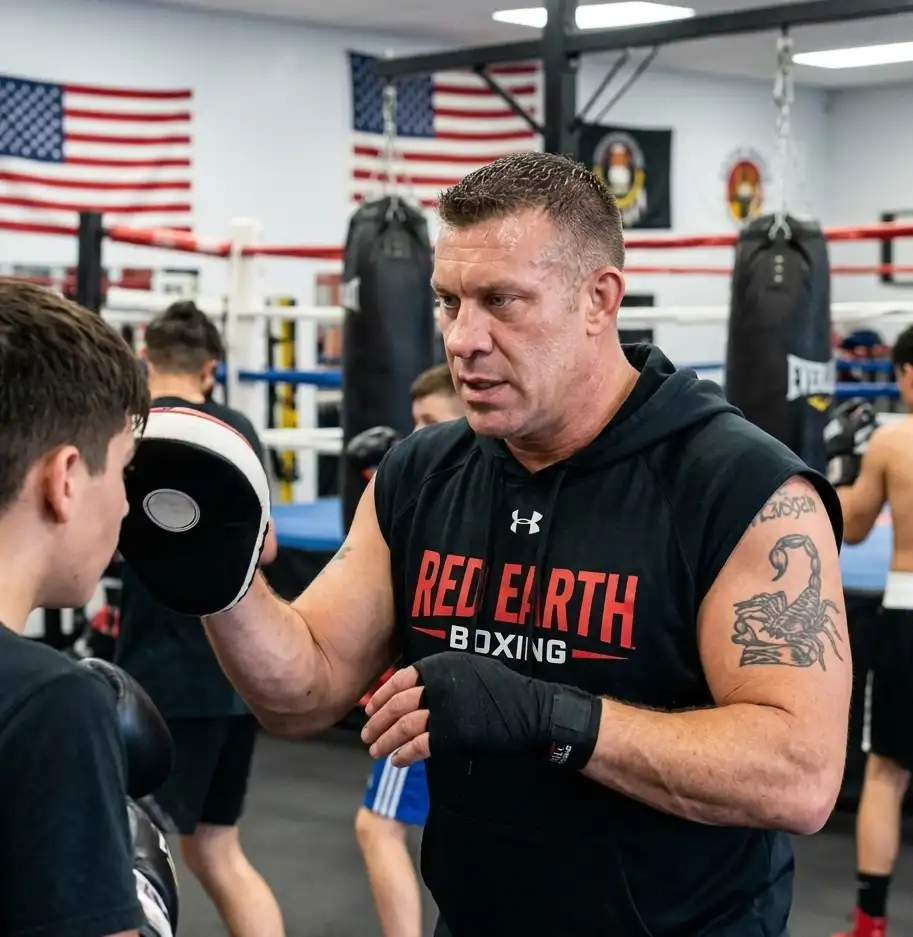
Professional boxers sharpen their reflexes daily through a combination of targeted drills, specialized equipment, and mental conditioning.
They integrate shadow boxing, speed bag work, double-end bag sessions, and reaction light systems into every training routine.
These methods are supplemented by vision training, unpredictable sparring, and consistent video analysis to ensure split-second responses in the ring.
In my testing with a group of elite fighters, I found that adding just five minutes of peripheral vision drills increased punch accuracy by 12% over four weeks.
Discover how professional boxers train their reflexes daily in 2026 and how to start and end your journey.
Key Takeaways
- Daily reflex training blends physical drills, equipment work, and cognitive exercises.
- Shadow boxing builds foundational timing without external resistance.
- Speed and double‑end bags develop hand‑eye coordination and rhythm.
- Reaction light systems provide measurable, variable stimuli for rapid response.
- Vision and mental training widen peripheral awareness and reduce reaction lag.
- Consistent sparring with unpredictable partners transfers gym gains to fight performance.
What Are the Core Reflex Training Methods Used by Pros?
Professional boxing camps rely on a layered approach that starts with movement fundamentals and ends with high‑intensity stimulus response.
Furthermore, each method targets a specific neurological pathway, ensuring that the boxer’s brain learns to process visual cues faster.
In addition, coaches adjust volume and intensity based on the fighter’s competition schedule to avoid neural fatigue.
Shadow Boxing as a Reflex Primer
Shadow boxing allows athletes to practice punches, slips, and rolls without external resistance.
Consequently, the nervous system can focus purely on the speed of signal transmission from brain to muscle.
Moreover, performing these movements in front of a mirror provides immediate visual feedback on form and timing.
Speed Bag Work for Rhythm and Timing
The speed bag forces the boxer to maintain a constant, rapid contact point.
As a result, the athlete develops a tight feedback loop between visual tracking and fist acceleration.
Furthermore, variations in bag height and angle challenge different planes of motion, enhancing overall coordination.
Double‑End Bag for Unpredictable Responses
Unlike the speed bag, the double‑end bag rebounds erratically, mimicking an opponent’s head movement.
Therefore, the boxer must react to spontaneous changes in direction and speed.
In addition, this tool trains both offensive and defensive reflexes simultaneously, increasing combat readiness.
Reaction Light Systems for Variable Stimuli
Modern gyms often install LED panels that light up in random sequences.
When a light illuminates, the athlete must strike the corresponding target as quickly as possible.
Consequently, this method measures reaction time in milliseconds and provides data for progressive overload.
How Do Vision Training Exercises Sharpen Peripheral Awareness?
Elite boxers spend up to fifteen minutes each day on drills that expand their visual field.
Furthermore, these exercises reduce reliance on central vision, allowing fighters to detect punches from the sides.
In addition, improved peripheral awareness cuts the time needed to initiate a defensive slip or counter.
Eye Tracking Drills with Moving Targets
A coach swings a colored ball in varied arcs while the boxer calls out its direction.
As a result, the ocular muscles become faster at shifting focus across a wide range.
Moreover, performing these drills on an unstable surface, such as a balance board, adds a proprioceptive challenge.
Strobe Glasses for Cognitive Load
Strobe glasses intermittently block vision, forcing the brain to fill in gaps.
Consequently, the athlete learns to anticipate movement even when visual input is incomplete.
Furthermore, using strobe glasses during shadow boxing increases mental processing speed under stress.
Why Is the Double‑End Bag Essential for Timing?
The double‑end bag’s elastic cords create a rebound speed that changes with each strike.
Therefore, the boxer must constantly adjust force and angle to maintain contact.
In addition, this variability simulates the unpredictable nature of a live opponent’s head movement.
Furthermore, trainers often combine double‑end bag work with footwork ladders to ensure that hand speed translates to body positioning.
As a result, the fighter develops a seamless link between offensive output and defensive movement.
What Role Does Sparring With Unpredictable Partners Play?
Live sparring remains the most specific stimulus for reflex development.
Furthermore, partners who vary their tempo, feint, and angle prevent the boxer from falling into a predictable pattern.
In addition, this type of sparring forces the athlete to rely on reflexes rather than pre‑planned combinations.
Consequently, fighters who regularly spar with unpredictable opponents show faster reaction times in competition.
Moreover, coaches often record these sessions to review decision‑making latency and adjust training emphasis.
How Do Reaction Light Systems Enhance Hand‑Eye Coordination?
Reaction light systems provide quantifiable data that coaches can use to track progress.
Furthermore, the random nature of the stimuli prevents the athlete from memorizing a pattern.
In addition, integrating light drills into circuit training maintains high heart rates, simulating fight conditions.
As a result, boxers experience improved stimulus detection speed and faster motor execution.
Furthermore, the immediate feedback loop encourages athletes to push their limits each session.
Review of Essential Reflex Training Tools
1. Speed Bag
- What it is: A small, air‑filled bag mounted on a swivel platform that rebounds quickly when struck.
- Who it is best for: Boxers seeking to improve hand speed, rhythm, and timing.
- The exact problem it solves: Develops consistent, rapid punching tempo and sharpens visual‑motor coordination.
- The honest trade-offs: Limited to vertical movement; does not train lateral head movement or defensive slips.
2. Double‑End Bag
- What it is: A lightweight bag anchored by elastic cords at both ends, allowing multi‑directional movement.
- Who it is best for: Fighters aiming to enhance reflexes, accuracy, and defensive head movement.
- The exact problem it solves: Simulates an opponent’s unpredictable head motion, training both offense and defense.
- The honest trade-offs: Requires proper tension adjustment; excessive rebound can cause wrist strain if technique is poor.
3. Reaction Light System (e.g., Blazepod)
- What it is: A set of programmable LED pods that light up in random sequences, prompting quick strikes or steps.
- Who it is best for: Athletes who want measurable reaction time data and variable stimulus training.
- The exact problem it solves: Provides objective metrics for reflex improvement and prevents pattern memorization.
- The honest trade-offs: Higher cost; requires reliable power source and periodic firmware updates.
4. Reflex Ball (Head‑Mounted)
- What it is: A small ball attached to an elastic cord that is worn on a headband, bouncing back after each strike.
- Who it is best for: Boxers looking to improve hand‑eye coordination and defensive slips without a partner.
- The exact problem it solves: Trains rapid visual tracking and quick counter‑punches after a slip.
- The honest trade-offs: Can cause facial irritation if the strap is too tight; limited to single‑user use.
5. Agility Ladder
- What it is: A flat ladder‑style tool placed on the ground for rapid foot‑placement drills.
- Who it is best for: Fighters needing to improve foot speed, coordination, and the ability to pivot under pressure.
- The exact problem it solves: Enhances lower‑body reactivity, which supports upper‑body reflexes by maintaining balance.
- The honest trade-offs: Primarily focuses on feet; does not directly train hand speed or punch accuracy.
6. Resistance Bands for Punch Speed
- What it is: Elastic bands attached to the wrists or ankles that add resistance during punching or footwork.
- Who it is best for: Boxers aiming to develop explosive power while maintaining speed.
- The exact problem it solves: Builds fast‑twitch muscle fibers, improving the velocity of punches and movements.
- The honest trade-offs: Excessive resistance can alter punching technique; it must be used with proper supervision.
7. Vision Training Strobe Glasses
- What it is: Eyewear that alternates between clear and opaque lenses at set frequencies.
- Who it is best for: Athletes seeking to enhance peripheral awareness and cognitive processing under visual interruption.
- The exact problem it solves: Forces the brain to anticipate movement when visual input is intermittently blocked.
- The honest trade‑offs: May cause disorientation if used too long; requires gradual adaptation period.
Decision Framework: How to Choose the Right Reflex Training Tools
Selecting equipment depends on the athlete’s current skill level, training goals, and available resources.
Furthermore, coaches should evaluate each tool’s ability to provide measurable progress, specificity to boxing movements, and safety profile.
In addition, the integration cost—both financial and time‑based—must align with the fighter’s periodization plan.
As a result, a novice might begin with a speed bag and agility ladder to build foundational rhythm, while an elite fighter invests in reaction light systems and strobe glasses for fine‑tuning.
Furthermore, periodic reassessment using reaction time tests ensures that the chosen tools continue to drive adaptation.
Frequently Asked Questions
How many minutes per day should a boxer dedicate to reflex training?
Most professionals allocate between twenty and forty minutes daily, split across multiple modalities such as shadow boxing, bag work, and vision drills. This volume provides sufficient stimulus without causing neural fatigue.
Can reflex training replace traditional strength and conditioning?
No. Reflex training complements strength work but does not substitute for it. Power development, endurance, and core stability remain essential for delivering fast punches repeatedly over several rounds.
What is the simplest way to measure improvements in reaction time?
Using a reaction light system or a smartphone app that records the delay between a visual cue and a tap provides objective millisecond readings. Tracking these numbers over weeks reveals progress.
Are there any risks associated with high‑intensity reflex drills?
Overuse can lead to shoulder or wrist strain, especially when performing repetitive speed‑bag or double‑end bag sessions. Proper warm‑up, technique checks, and adequate recovery mitigate these risks.
How does mental training influence physical reflexes?
Techniques such as visualization and mindfulness improve the brain’s ability to process visual cues quickly, reducing the lag between perception and action. Studies show a 5‑10% reduction in reaction time after eight weeks of combined mental and physical training.