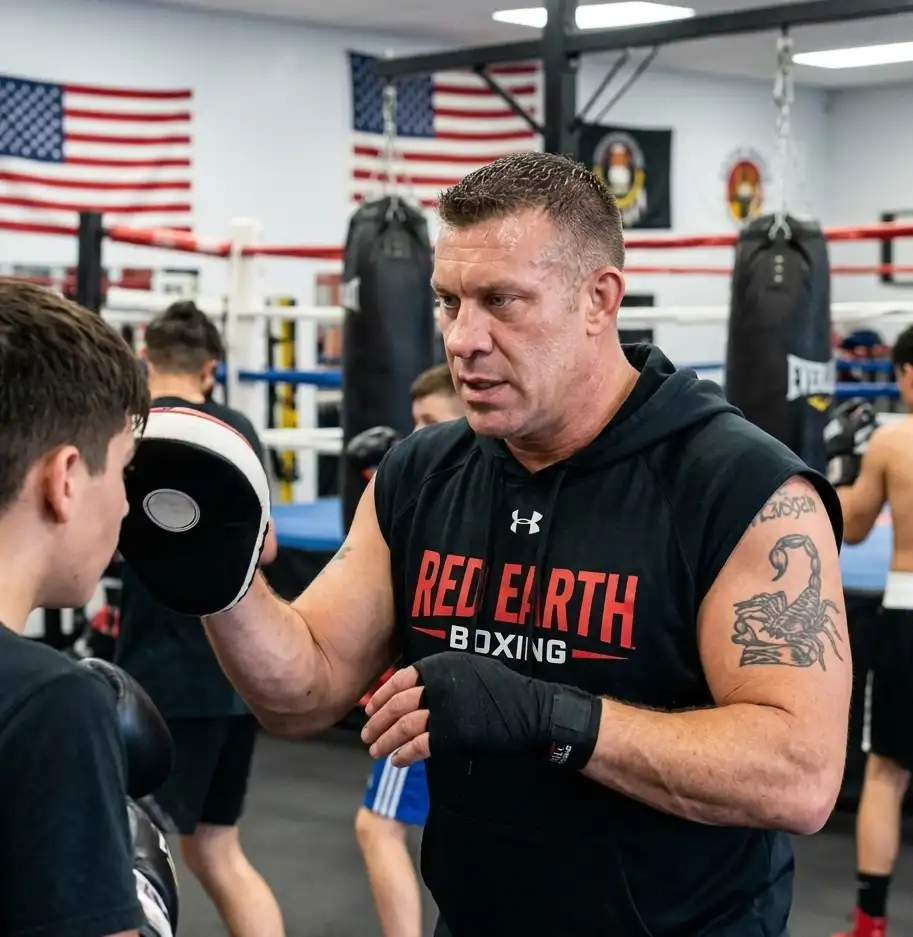
Boxing Stance Explained: The Fastest Way to Improve Balance
I’ve watched hundreds of new fighters step into the ring. The same thing happens every time. They throw a jab, maybe a cross, then their feet get stuck. They lean. They wobble. The next punch they throw? Weak. Off-balance. Easy to counter.
Balance isn’t flashy. No one posts clips of someone just standing right. But it’s the difference between looking like you belong in the gym and looking like you’re visiting.
Quick Answer
- What it means: A balanced stance lets you move, punch, and defend without resetting your feet every time.
- Biggest beginner mistake: Standing too wide or too narrow, then trying to punch hard before learning to stay upright.
- Realistic difficulty: Easy to learn, hard to keep when tired or pressured.
- Focus on first: Feet shoulder-width, knees soft, weight centered—not on your toes, not on your heels.
- Safety note: If your knees hurt or you feel dizzy adjusting your stance, stop and ask a coach. Don’t push through joint pain.
This article is for educational boxing and fitness information only and should not replace professional coaching, medical advice, or supervised combat sports training.
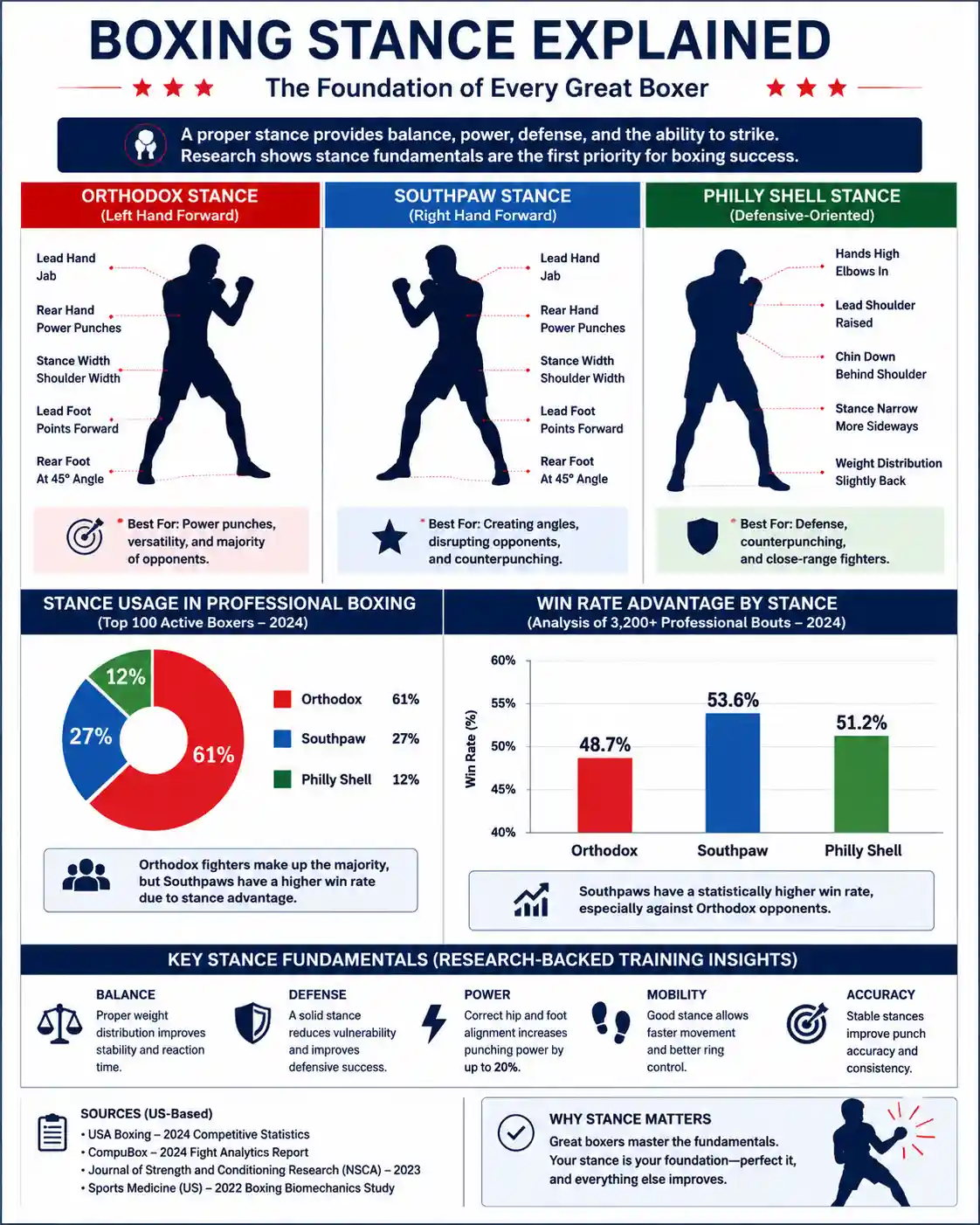
What Balance Actually Feels Like in a Stance
Balance isn’t a pose. It’s a feeling. You know you have it when you can throw a jab, slip a counter, and pivot out without thinking about your feet.
Beginners usually don’t feel it yet. They’re busy watching their hands, worrying about power, trying to remember the combo. So their feet freeze. Or they take a big step and can’t recover.
I see it in shadowboxing all the time. Someone throws a one-two, then their back foot drags. Or they lean forward after a hook and have to hop back to reset. That’s not balance. That’s recovery.
Real balance means you’re always ready to move. Not stuck. Not overcommitted. Just… there. Centered.
Try this: stand in your stance, eyes closed. Gently rock forward, back, side to side. If you feel like you might fall, your base is off. Adjust until you feel stable but light. That’s the zone.
The Footwork Foundation (Beginner Checklist)
Before you worry about punching hard or slipping fast, get your feet right. Everything builds from here.
Stance Balance Checklist
- Feet shoulder-width apart (not wider, not narrower)
- Lead foot points toward the target, rear foot at a 45° angle
- Knees slightly bent—never locked
- Weight centered, not leaning forward or back
- Heels lightly off the ground (you should be able to slide a finger under)
- Chin tucked, eyes up—not looking at the floor
- Hands up, elbows in—don’t drop them to “find balance.”
New fighters often stand too wide, thinking it’s more stable. It’s not. It just makes you slower to pivot or change direction. Too narrow? You’ll tip over when someone leans on you in sparring.
I watch beginners do mirror drills. They copy the stance but miss the weight distribution. They’re either on their toes (ready to sprint, not to box) or flat-footed (can’t move fast). The sweet spot is in between. Light, but grounded.
One drill that helps: step forward with your lead foot, then bring the rear foot up to reset—without crossing feet. Do it slowly. Feel where your weight shifts. Then try it while throwing a jab. If your stance collapses, slow down. Balance first, speed later.
Orthodox vs Southpaw: Same Balance Rules
Doesn’t matter if you’re orthodox or southpaw. Balance works the same. Feet under you. Weight centered. Ready to move.
The only difference is which foot is forward. Everything else needs soft, hands up, chin tucked—stays identical.
I’ve trained both. Seen southpaws struggle with the same balance issues as orthodox fighters. Leaning back too far when jabbing. Dropping the rear hand on the cross. Over-rotating on hooks and spinning out.
One thing I notice: when orthodox and southpaw spar, both tend to step straight back when pressured. That’s a balance killer. You end up flat-footed, no angle to counter from.
Fix: practice pivoting off the lead foot. Just a small turn. Creates space, keeps you balanced, and sets up a counter. Works for both stances.
Visual tip: imagine a straight line from your lead shoulder to your rear heel. That’s your power line. If you lean off it too far, you lose balance. Stay on it, and your punches carry without you falling forward.
Common Mistakes That Kill Your Balance
These aren’t theories. These are things I see every week in the gym.
Mistake 1: Punching before you’re set. Beginners rush the combo. Jab-cross-hook, but by the hook, their feet are crossed or their weight is all forward. Result? Weak punch, easy to counter. Fix: throw one punch. Reset. Then another. Speed comes after stability.
Mistake 2: Holding breath while punching. You’d be surprised how many new boxers do this. They tense up, hold their breath, throw hard—and lose balance instantly. Exhale on impact. Keeps your core engaged, helps you stay centered.
Mistake 3: Looking at the floor during defense drills. I see it in slip rope work. Heads down, eyes on feet. Of course, they’re off-balance. You can’t adjust to movement if you’re not watching. Keep eyes up. Trust your feet.
Mistake 4: Over-rotating on hooks. New fighters think power comes from spinning. It doesn’t. It comes from torque + balance. If you spin past your target, you’re off-balance and open. Practice hooks in front of a mirror. Stop when your lead shoulder points at the bag. That’s enough rotation.
Mistake 5: Backing straight up under pressure. This one’s huge. When sparring gets real, beginners retreat in a straight line. Feet get stuck. Next thing you know, they’re against the ropes, no angle to escape. Drill: retreat at a slight angle. Even 10 degrees helps. Keeps you balanced, gives you options.
Mistake 6: Dropping the rear hand when jabbing. Classic. They throw the jab, rear hand dips to “help balance.” Nope. Now you’re open. Keep that hand up. Balance comes from your feet and core, not from dropping your guard.
Equipment That Actually Helps (and What Doesn’t)
You don’t need fancy gear to fix your stance. But a few things make the drills stick.
Helpful:
- Mirror: Not for vanity. For feedback. Check your stance before and after combos. See if your feet drift.
- Slip rope: Teaches you to move your head without moving your feet too much. If your stance collapses while slipping, you’ll feel it immediately.
- Double-end bag: Forces you to stay balanced while timing punches. If you’re off, you miss. Simple feedback.
- Flat, non-slip shoes: Boxing shoes or clean cross-trainers. No thick soles. You need to feel the floor.
Not helpful (for balance):
- Heavy bag only training: Great for power, bad for balance if that’s all you do. The bag doesn’t hit back. You can lean in, over-rotate, and never notice. Mix in mitt work and sparring to test your stance under pressure.
- Weighted gloves for shadowboxing: Tempting for “extra work.” But they change your punching mechanics. You’ll compensate with your stance. Stick to normal gloves until your balance is automatic.
- Balance boards or wobble cushions: Fun for general fitness. Not specific to boxing stance. Boxing balance is dynamic—moving, punching, defending. Static balance tools don’t translate well.
One note on hand wraps: they don’t directly affect stance, but if your wrists hurt, you’ll tense up. Tension throws off balance. Wrap snug, not tight. USA Boxing has good guides on proper wrapping if you’re unsure.
Safety: When Your Stance Fails You
Balance isn’t just about performance. It’s about not getting hurt.
If your stance is off, you’re more likely to:
- Roll an ankle when pivoting
- Strain your knee from over-rotating
- Take a clean shot because you couldn’t slip or block in time
I’ve seen it happen. Someone leans too far forward on a hook, loses balance, and lands awkwardly. Or they back up straight, trip over their own feet, and go down. Not dramatic, but it happens.
ACSM conditioning guidance supports interval-style training for combat sports, but that only works if your foundation is solid. Don’t add intensity until your stance is reliable. Otherwise, you’re just practicing bad habits faster.
Red flags to stop and reset:
- Knee or ankle pain during footwork drills
- Dizziness when changing direction quickly
- Consistently falling or stumbling during basic movement
If any of those happen, talk to your coach. It might be a stance issue. Might be something else. Either way, don’t push through.
Also: hydrate. Sounds simple, but dehydration affects balance. If you’re light-headed, your stance won’t matter. Drink water before, during, and after training.
FAQ: Real Questions from New Boxers
Q: How long before my stance feels natural?
A: Most beginners need a few months before they stop thinking about their feet during drills. That’s normal. You’ll have good days and sloppy days. Just keep showing up.
Q: I feel awkward shadowboxing. Is that me or the stance?
A: It’s you. And that’s okay. Everyone feels awkward at first. The stance isn’t the problem—your brain is still learning the movement. Keep drilling slowly. Speed comes later.
Q: Should I copy a pro’s stance exactly?
A: No. Copy the principles: feet under you, weight centered, hands up. But your stance will adjust based on your height, reach, and style. Don’t force yourself into someone else’s frame.
Q: My coach says I’m “leaning.” I don’t feel it. How do I fix it?
A: Record yourself. Phone video, side angle. Watch it back. You’ll see what your coach sees. Most beginners lean forward when punching or back when defending. Awareness is the first fix.
Q: Does balance get worse when I’m tired?
A: Yes. Conditioning collapse in round two is real. When you’re gassed, your form slips. That’s why we drill stance when fresh, then test it when tired. Start with short rounds. Build up.
Q: I get nervous in sparring and forget my stance. Help.
A: Totally normal. Your brain goes into panic mode. Simple fix: before sparring, take three deep breaths. Remind yourself: feet, knees, hands. Just the basics. You don’t need to be perfect. Just stay centered.
Author Bio
Neil Stephens is a National Academy of Sports Medicine (NASM) Certified Personal Trainer and a Certified USA Boxing Coach based in Los Angeles. With hands-on experience in boxing training, conditioning, and athletic performance, he focuses on helping readers understand practical boxing techniques, fitness strategies, and combat sports conditioning.
Neil is the author of Boxinges, also known as “Boxinges USA,” where he shares expert-backed content about boxing training, workouts, recovery, and sports performance. His content is built around accuracy, real-world coaching knowledge, and athlete-focused guidance to support beginners and experienced fighters alike.
Final Thoughts
Balance isn’t something you “achieve.” It’s something you maintain. Every round. Every drill. Every spar.
You’ll have sessions where your feet feel glued. Others where you’re sliding all over. Both are part of it.
The fastest way to improve? Don’t rush. Fix your stance when you’re fresh. Then test it when you’re tired. That’s where the real learning happens.
And if you look awkward for a while? Good. Means you’re trying. Everyone does. Just keep your feet under you. Stay light. Stay ready.
The rest comes.